
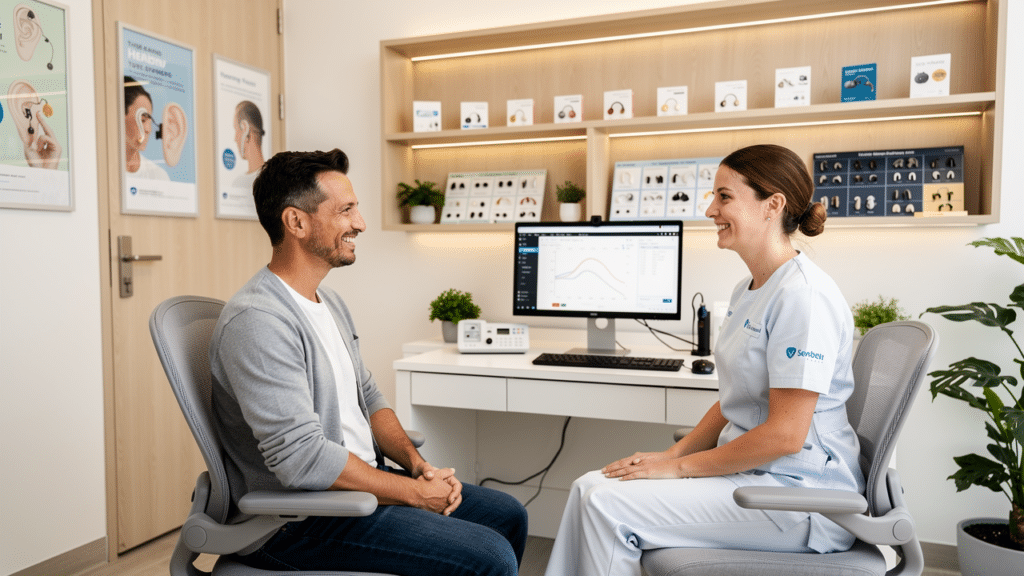
As the new school year begins, hearing health often gets overlooked during back-to-school preparations. Yet untreated hearing loss in children and young adults can significantly impact academic performance, social development, and quality of life.
Why Hearing Screenings Matter
Many school districts require hearing screenings, but these basic tests don’t always catch mild or moderate hearing loss. A comprehensive hearing evaluation from a qualified hearing specialist provides a much more complete picture of your child’s hearing health.
Signs of Hearing Difficulty in Students
Watch for these warning signs: frequently asking people to repeat themselves, turning up device volume to high levels, struggling to follow directions in noisy environments, appearing inattentive in class, and falling behind academically despite good effort.
Protecting Young Ears from Noise
Earbuds at high volumes are a growing concern for teens. The World Health Organization estimates over one billion young people worldwide are at risk for hearing loss due to recreational noise exposure. Encourage volume limits and breaks from prolonged listening.
Safe Listening Rules for Kids and Teens
- Keep headphone volume at or below about 60 percent of maximum
- Take a listening break every hour
- Choose headphones that fit well or reduce background noise, so the volume does not need to be raised to drown it out
- Use the volume limit settings built into most phones and tablets
- Bring earplugs or earmuffs to concerts, games, and band practice
Working With the School
If your child has hearing loss, tell the teacher early in the year. Seating near the front, facing the teacher, written instructions, and reduced background noise all help. Schools can also arrange classroom accommodations when a hearing evaluation documents the need.
What a Hearing Evaluation Involves for a Child
Testing is adapted to the child’s age. Older children wear headphones and raise a hand or press a button when they hear a tone, then repeat words. Younger children are often tested through play, such as dropping a block in a bucket each time they hear a sound. The provider also looks in the ears and may check how the eardrum moves, which shows whether fluid is present. None of it hurts, and a parent can stay in the room. Results are explained the same day, along with any next steps for home, school, or the child’s doctor.
Common Questions From Parents
My child passed the school screening. Is that enough?
A screening checks only a few tones at one level. If you or the teacher still have concerns, a full evaluation gives a more complete answer.
Can ear infections affect hearing?
Yes. Fluid behind the eardrum can cause temporary hearing loss. Frequent infections or hearing that does not bounce back should be checked by your child’s doctor.
What signs should I watch for at home?
Turning the TV up, often saying what or huh, not responding when called from another room, and unclear speech for their age are common signs.
Who should we see first?
Start with your child’s doctor or contact us to ask whether our office can see your child. You can also read about hearing testing and hearing loss prevention.
Schedule a comprehensive hearing evaluation with Revolution Hearing before the school year gets into full swing. Early detection makes all the difference.
